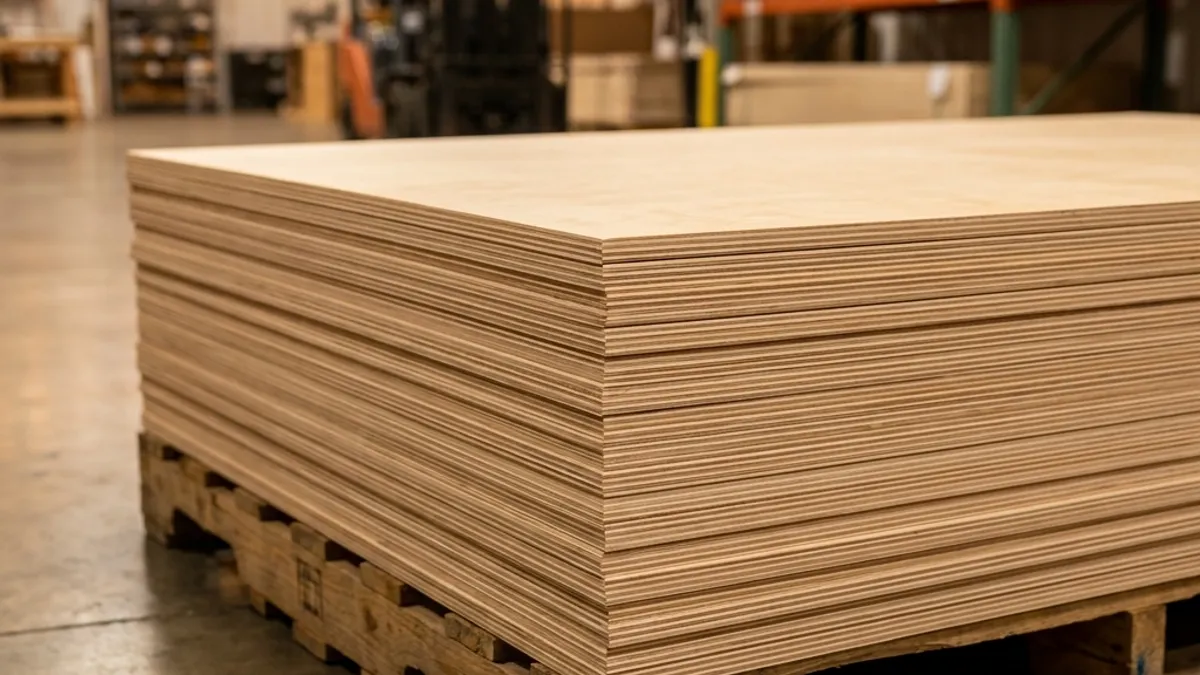
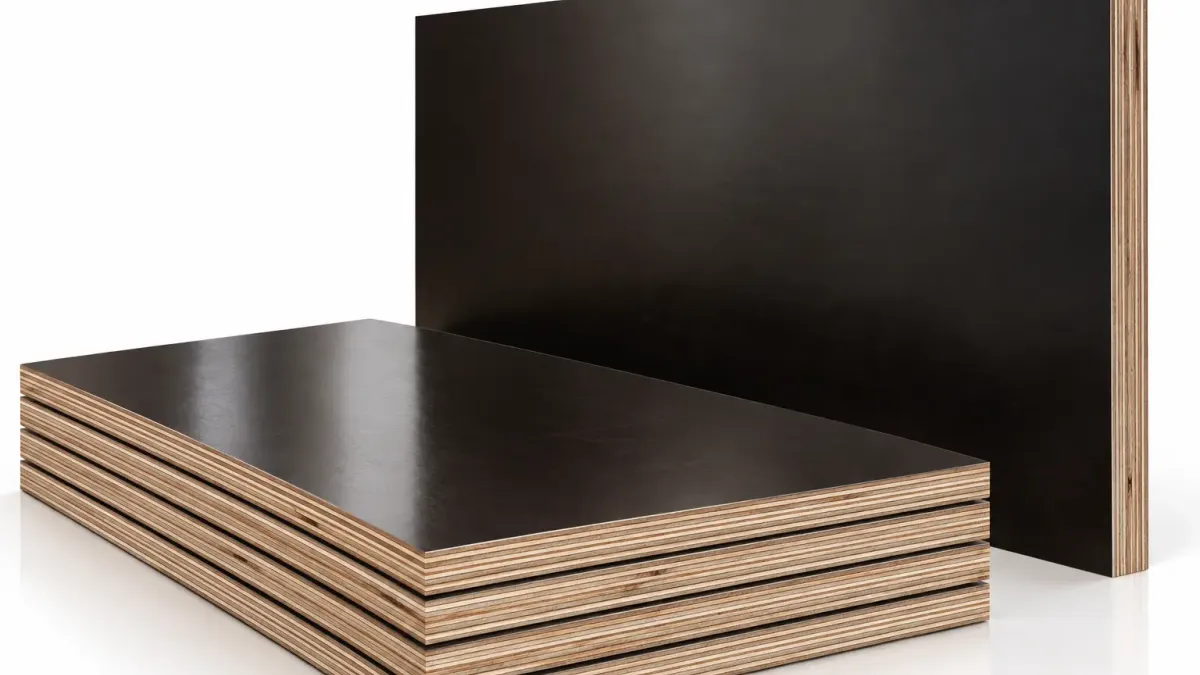
Thickness is the first decision when ordering shuttering plywood, and it changes everything that follows: how far apart your supports can be, how heavy each sheet is for your crew, how flat the finished concrete will be, and how many pours the board survives.
Here is a practical comparison of 12mm and 18mm boards, the two most common thicknesses on Indian sites, and when to move up to 25mm.
Key Takeaways
- Plywood stiffness rises with the cube of thickness, so an 18mm board is about 3.4× stiffer than a 12mm board.
- 12mm suits closely supported system formwork, columns and curved work, and is about a third lighter.
- 18mm is the default for conventional slab and beam formwork on timber or steel joists.
- 25mm is used for heavy pours, bridges and infrastructure where support spacing is wide.
The Quick Answer
Use 18mm for most slab, beam and wall formwork supported on joists. Use 12mm when the board sits on a closely spaced frame, as in aluminium or steel system formwork, or when you need a lighter, more flexible panel. Your formwork designer's support spacing always takes priority.
Why Thickness Matters: Stiffness and Deflection
Wet concrete is heavy, and the board between two supports bends under it. The amount it bends (deflection) shows directly on the finished concrete as sagging or waviness.
For the same material, a panel's bending stiffness is proportional to its thickness cubed:
So a 12mm board needs much closer supports to achieve the same flatness. That is why 12mm works well on system formwork with a dense frame, and 18mm is preferred where joists are spaced further apart.
12mm vs 18mm at a Glance
| Factor | 12mm | 18mm |
|---|---|---|
| Relative stiffness | 1× | ≈ 3.4× |
| Approx. weight (ZIPCO® Calibrated, 8 × 4 ft) | 24 kg | 35 kg |
| Support spacing | Closer | Wider |
| Handling | Easier, faster for crews | Heavier, more rigid |
| Curved or small work | Better | Harder to bend |
| Typical use | System formwork, columns, scaffolding decks | Slabs, beams, walls on joists |
When 12mm Shuttering Plywood Is the Right Choice
- Aluminium and steel system formwork, where the frame supports the board at short intervals. A calibrated board keeps panels flush.
- Column boxes held by clamps or yokes at close centres.
- Curved or circular work, where some flexibility helps.
- High-rise sites where crane time and manual handling are limited and lighter panels speed up the cycle.
When You Need 18mm (or 25mm)
- Conventional slab formwork on timber battens or steel joists. 18mm is the standard choice.
- Beam sides and soffits, which carry concentrated concrete loads.
- Walls and retaining walls, where fresh concrete pressure is high.
- Projects needing more reuse: thicker boards tolerate handling and re-fixing better.
For bridges, flyovers and heavy infrastructure pours, a 25mm board such as OJA® Mirror Finish allows wider support spacing and resists heavy loads.
Tips Before You Order
- Ask for the thickness tolerance, and measure samples at several points.
- For system formwork, choose calibrated shuttering plywood so every panel matches the frame.
- Confirm phenolic WBP/BWP glue whatever the thickness.
- Plan repetitions: see how to get more pours from every sheet.
Frequently Asked Questions
Which thickness of shuttering plywood is best for slabs?
How much does an 18mm shuttering plywood sheet weigh?
Can I use 12mm shuttering plywood for walls?
Is 25mm shuttering plywood available?
Need a bulk quote?
Share your thickness, size, quantity and delivery location. Our trade desk replies with specifications and pricing for domestic and export orders.