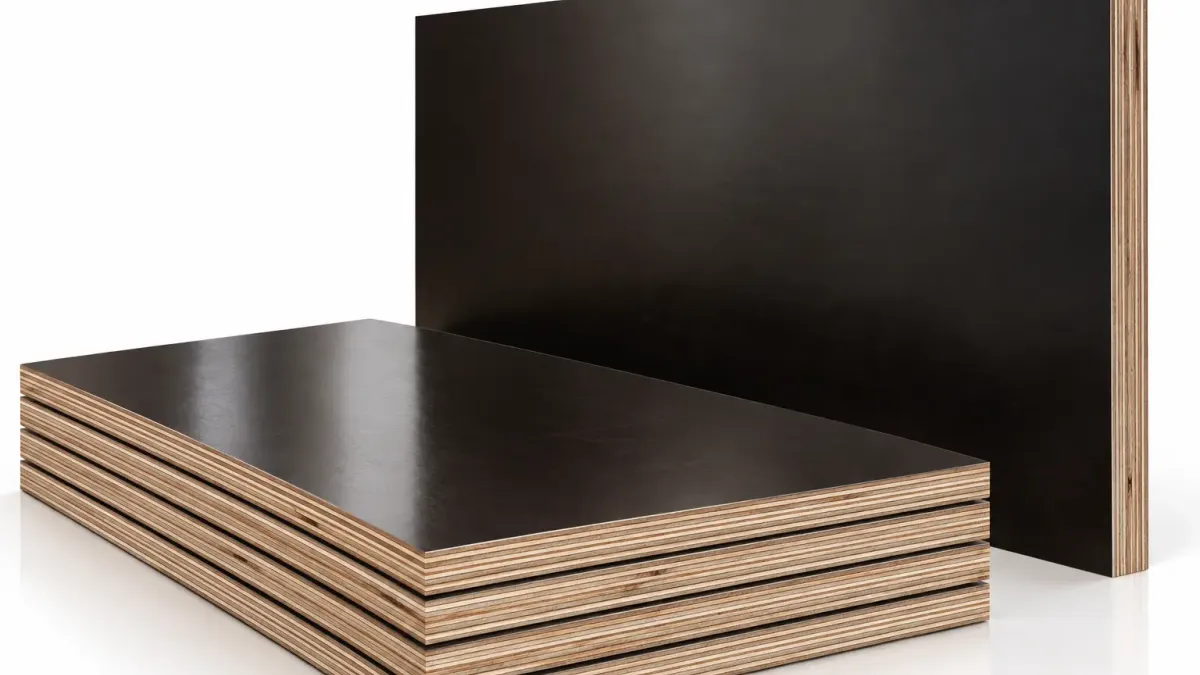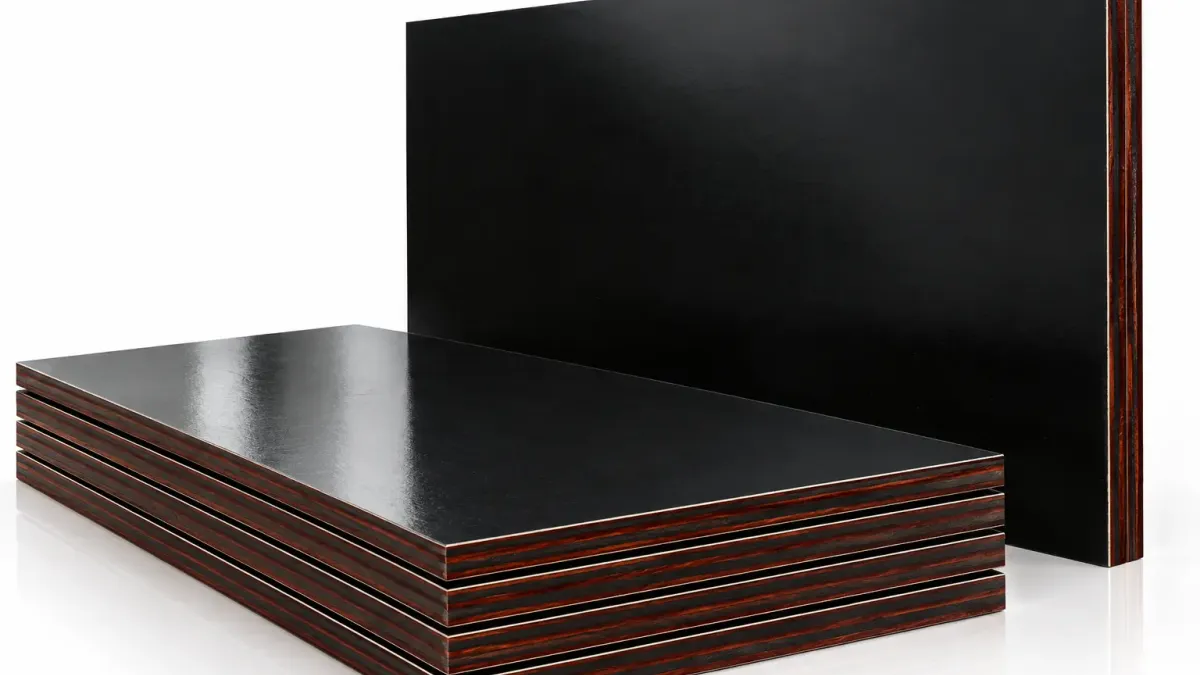
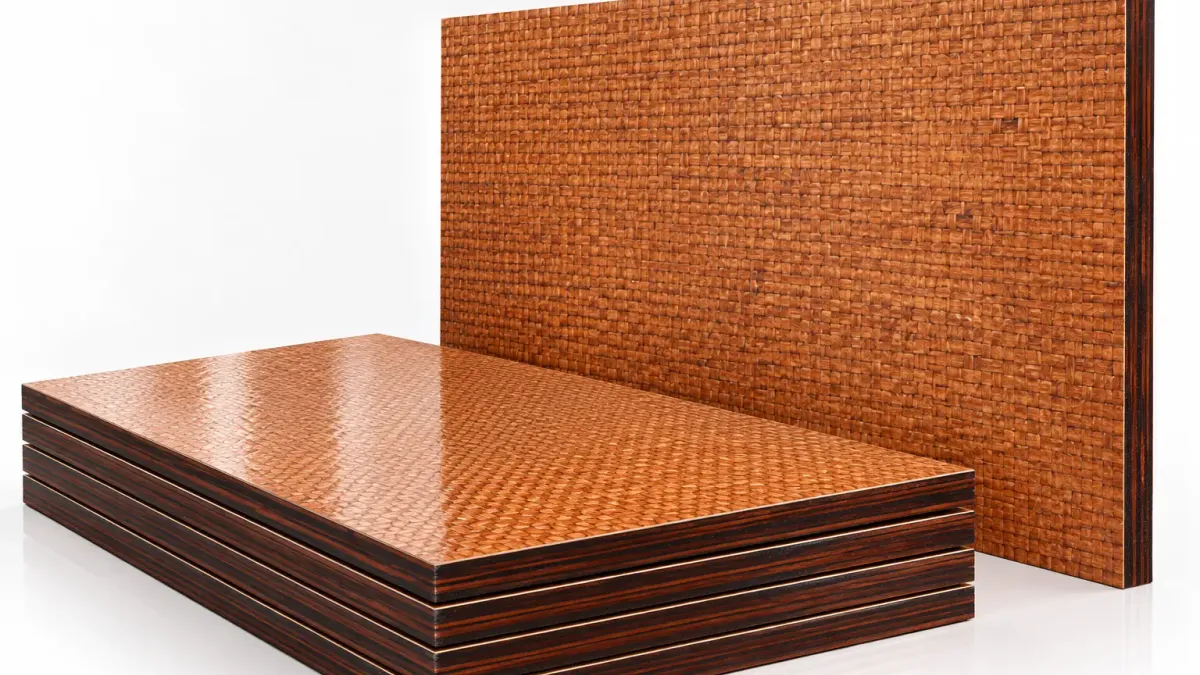
"What is your shuttering plywood price?" is the first question almost every contractor asks, and it is the right place to start. But two sheets that look identical on a site can differ widely in price, and the cheaper sheet is often the more expensive one by the end of the project.
This guide explains what actually goes into the price of a film faced shuttering plywood sheet, how to compare quotes fairly, and which warning signs to look for in a quote that seems too good to be true.
Key Takeaways
- Price is driven mainly by core veneer quality, glue type, film GSM, thickness and calibration.
- Compare boards on cost per pour (price ÷ repetitions), not on price per sheet.
- Phenolic (WBP/BWP) glue is essential; MR-glued boards delaminate in wet concrete.
- Always ask for the glue specification, film type, thickness tolerance and boiling water test results.
What Drives the Price of a Shuttering Plywood Sheet
A shuttering plywood sheet is a combination of veneers, glue, a surface film and finishing. Each one has a cost, and each one decides how many times the board can be reused.
1. Core veneers
Dense hardwood veneers such as eucalyptus hold their shape under the weight of wet concrete and resist screw pull-out. Cheaper boards often use lighter, softer species or fill the core with overlapping and gapped veneers. Gaps create soft spots that dent and let water travel inside the board.
2. Glue (resin)
This is the single most important factor. Shuttering plywood must be bonded with phenol formaldehyde (PF) resin, sold as WBP or BWP grade, which survives boiling water. Boards bonded with cheaper urea formaldehyde (MR) glue look the same when new but start separating after a few pours.
3. Surface film
The phenolic film gives the smooth concrete finish and protects the veneers. Film is measured in GSM (grams per square metre): a higher-GSM film is thicker, resists abrasion longer and releases concrete more cleanly, so it adds to the price but also to the number of pours.
4. Thickness and ply count
An 18mm sheet uses more veneer than a 12mm sheet, and a board with more, thinner plies is more stable than one with fewer, thicker plies. Watch for under-sized boards: a sheet sold as 18mm that measures 16.5mm is cheaper for a reason.
5. Calibration and edge sealing
Calibrated boards are held to a tight thickness tolerance, which matters for aluminium and steel system formwork where panels must sit flush. Factory edge sealing stops water entering through the edges, the most common cause of early swelling.
6. Size and packing
8 × 4 ft is the standard size. Larger formats (for example 10 × 5 or 11 × 6 ft) and export-grade palletised packing cost more per sheet.
Price per Sheet vs Cost per Pour
The fairest way to compare two boards is to work out what each one costs every time you pour concrete:
Here is an illustrative example using a base price of X:
| Board A (economy) | Board B (high-repetition) | |
|---|---|---|
| Price per sheet | X | 1.6 X |
| Repetitions achieved | 10 | 30 |
| Cost per pour | 0.10 X | 0.053 X |
| Result | — | About 47% cheaper per pour |
Board B also means fewer sheet changes, less labour for cutting and fixing replacements, and a more consistent concrete finish across floors.
Which Grade Fits Which Job
Match the board to the number of pours your project actually needs. Repetition figures below are manufacturer ratings under proper handling.
| Product | Rated repetitions | Best suited for |
|---|---|---|
| OJA® Mirror Finish | 20+ | Residential slabs, beams, columns; 12, 18 & 25mm |
| ZIPCO® Calibrated Shuttering | 30+ | Aluminium formwork, scaffolding and system formwork |
| ZIPCO® Metallic | 50+ | High-rise projects with repetitive floor cycles |
| ZIPCO® 100 | Maximum repetitions | Heavy RCC and infrastructure formwork |
| ZIPCO® Plastic Shuttering | 30–60+ | Wet conditions and very high reuse |
Red Flags in a Cheap Quote
- No glue specification, or vague terms like "waterproof" without WBP/BWP or phenolic.
- No boiling water test report or batch test certificate.
- Thickness not stated with tolerance; measure sample sheets at the corners and centre.
- Thin or patchy film that scratches easily with a fingernail or key.
- Visible core gaps or overlaps when you look at a cut edge.
- Unsealed edges, which let water in from the first pour.
How to Get an Accurate Quote
To get a quote you can compare like-for-like, share these details with every supplier:
- Thickness (12, 18 or 25mm) and sheet size
- Quantity in sheets or truckloads
- Type of work: slabs, walls, columns, aluminium/system formwork
- Number of repetitions you expect
- Delivery location, or port and Incoterm for export
Not sure which thickness you need? Read our guide on 12mm vs 18mm shuttering plywood.
Frequently Asked Questions
Why does shuttering plywood price vary so much between suppliers?
Is a more expensive shuttering plywood always better?
Is shuttering plywood priced per sheet or per square foot?
Do you supply shuttering plywood in bulk and for export?
Need a bulk quote?
Share your thickness, size, quantity and delivery location. Our trade desk replies with specifications and pricing for domestic and export orders.