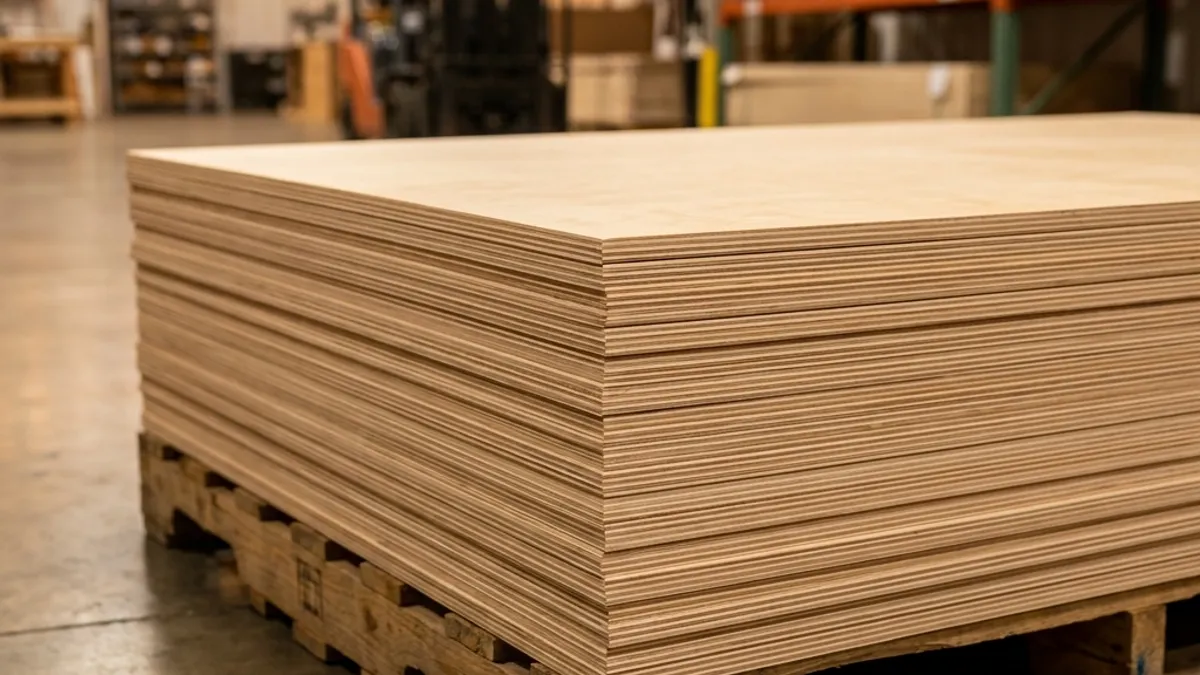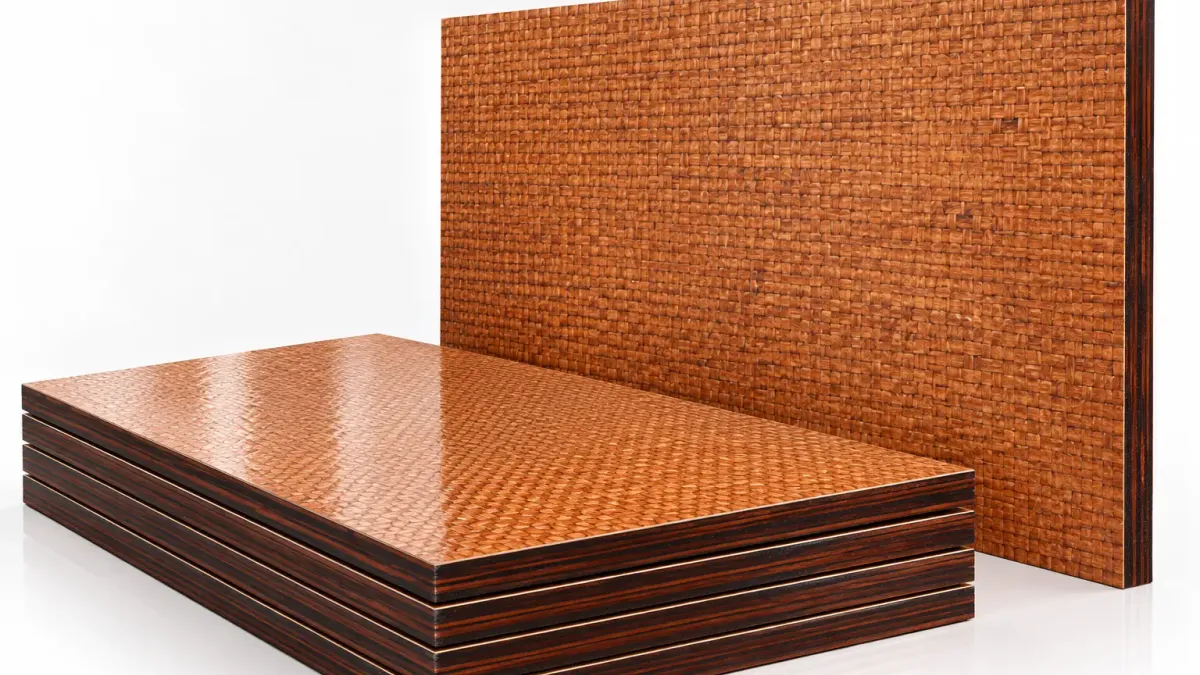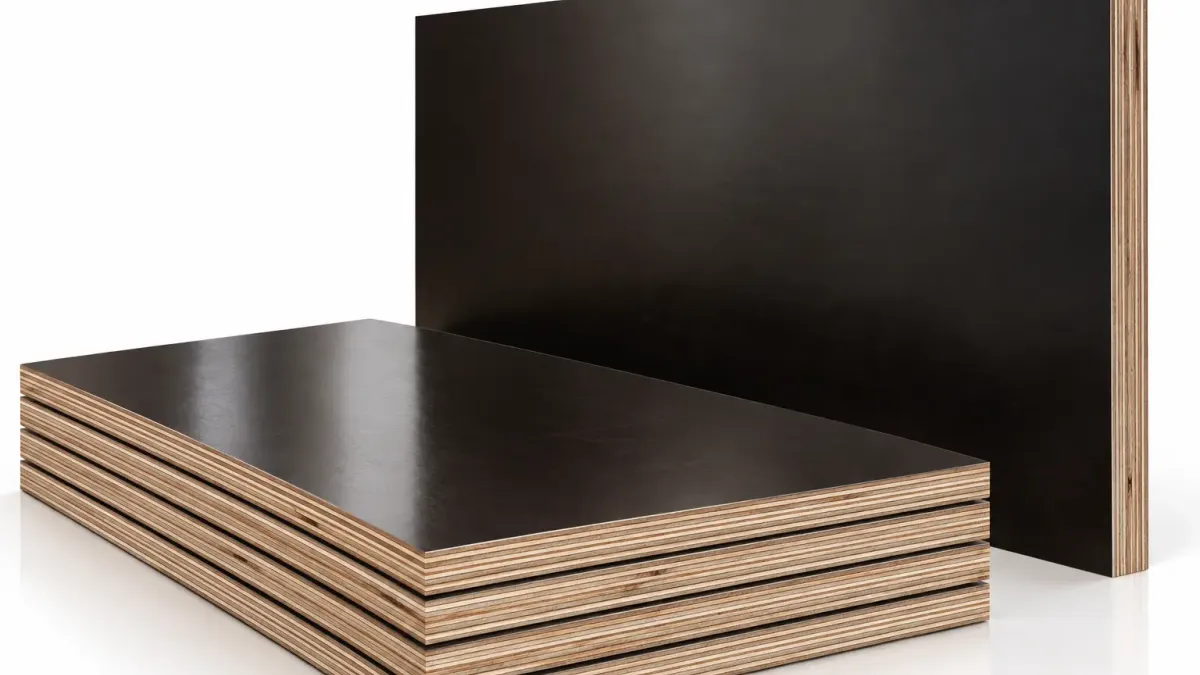
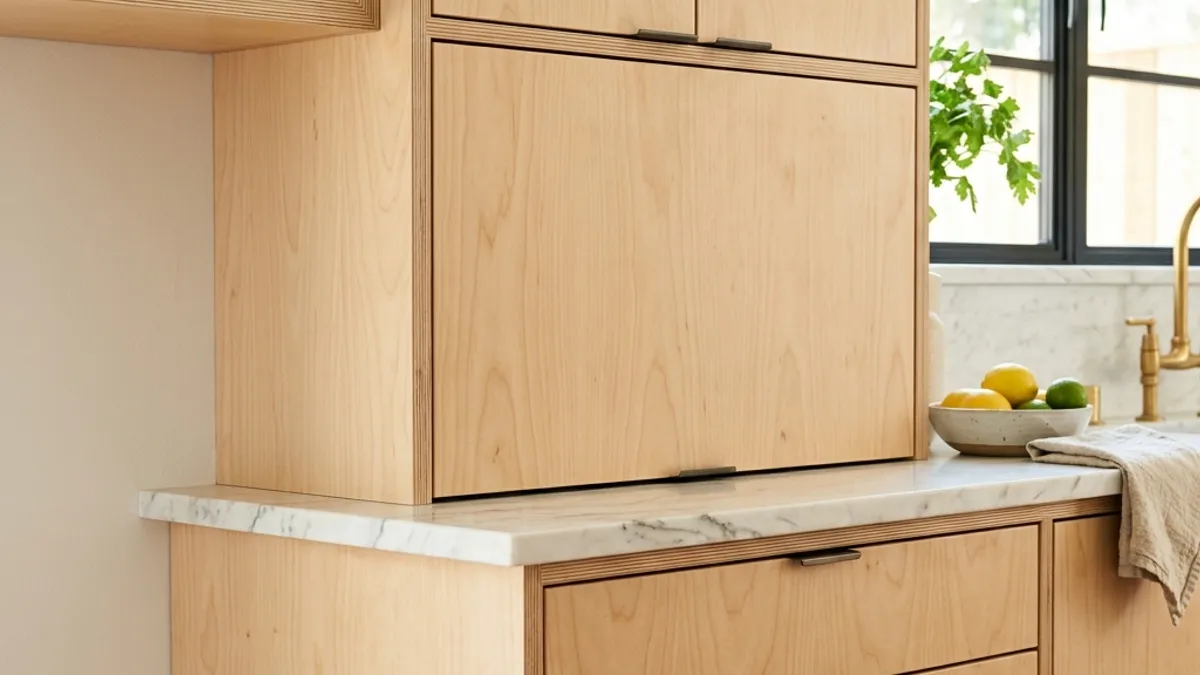
MR and BWP are the two plywood grades buyers compare most often in India. They can look identical in a showroom, but they are made with different glues and behave very differently once water is involved.
Choosing the wrong grade either wastes money (BWP where MR would do) or leads to swollen, delaminated cabinets (MR where water reaches the board). Here is how to choose correctly.
Key Takeaways
- MR (Moisture Resistant) uses urea formaldehyde resin and suits dry interiors.
- BWP (Boiling Water Proof) uses phenol formaldehyde resin and withstands boiling water.
- Use BWP for kitchens near sinks, bathrooms and anywhere water can reach the board.
- Even BWP plywood needs sealed edges and laminate to perform well over time.
What Is MR Plywood?
MR stands for Moisture Resistant. The veneers are bonded with urea formaldehyde (UF) resin, which tolerates normal indoor humidity but is not designed for direct or repeated contact with water. MR is often called commercial plywood, and the general-purpose plywood standard in India is IS 303.
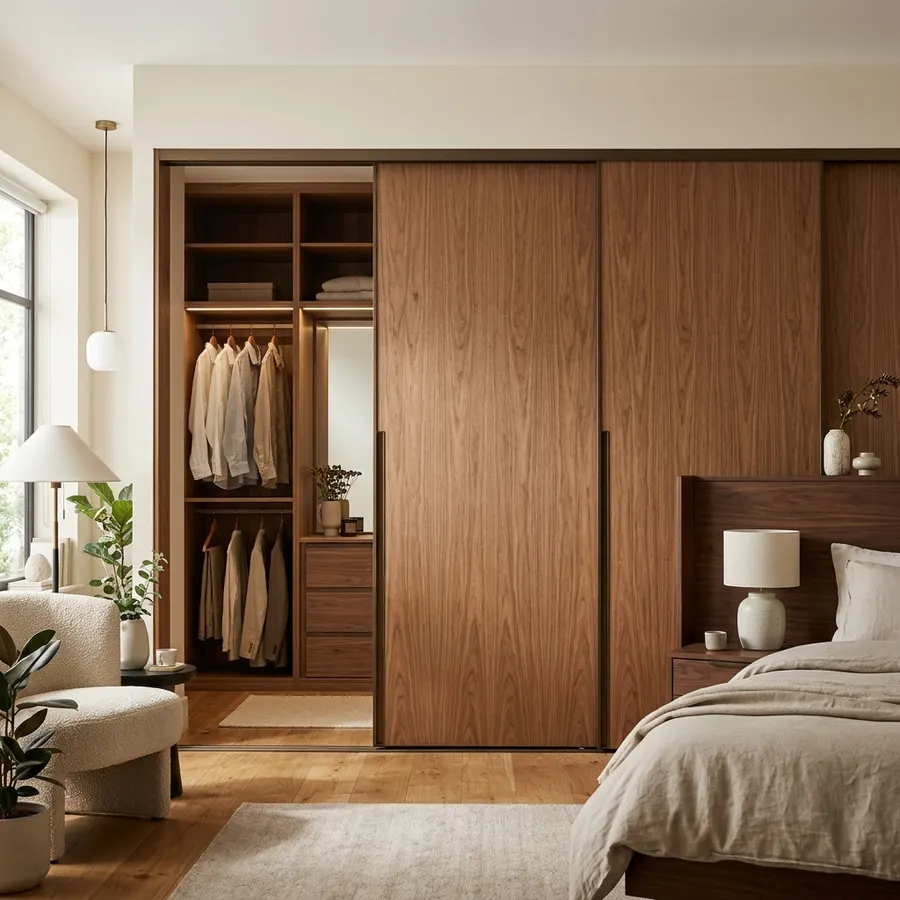
MR plywood is the economical choice for furniture in dry rooms: wardrobes, beds, TV units, bookshelves and office furniture.
What Is BWP Plywood?
BWP stands for Boiling Water Proof. The veneers are bonded with phenol formaldehyde (PF) resin, which cures into a bond that does not break down in water, and is tested by boiling samples in water for an extended period.
BWP plywood is used wherever moisture is a real risk: kitchens, bathrooms, utility areas and semi-open spaces. Marine plywood (IS 710) is a stricter, separate specification for boats and marine structures.
MR vs BWP: Side-by-Side Comparison
| Factor | MR plywood | BWP plywood |
|---|---|---|
| Resin | Urea formaldehyde (UF) | Phenol formaldehyde (PF) |
| Water resistance | Humidity only | Boiling water proof |
| Glue line colour | Light | Dark reddish-brown |
| Typical uses | Wardrobes, beds, TV units, office furniture | Kitchens, bathrooms, utility areas |
| Relative cost | Lower | Higher |
| ZIPCO® product | MR 303 | PF 710 |
Room-by-Room: Which Grade to Use
| Application | Recommended grade |
|---|---|
| Bedroom wardrobes, beds | MR |
| Living room TV units, shelving | MR |
| Office workstations and storage | MR |
| Kitchen base cabinets, sink unit | BWP |
| Kitchen wall cabinets (away from water) | MR or BWP |
| Bathroom vanities | BWP |
| Balconies, semi-open areas | BWP |
For modular kitchens and wardrobes made on CNC machines, consider a calibrated version of either grade for uniform thickness.
Common Myths
"BWP is waterproof forever, so edges don't matter."
The glue is waterproof, but exposed edges still absorb water. Always edge-band or seal cut edges and use a laminate or veneer finish.
"MR plywood is low quality."
Not true. A well-made MR board with good core veneers is strong and durable in dry interiors. It is simply the wrong grade for wet areas.
"Thicker plywood is more waterproof."
Water resistance comes from the resin, not the thickness. An 18mm MR board is no more water resistant than a 12mm MR board.
How to Identify the Grade
- Check the grade marking printed on the sheet and the invoice.
- Look at the glue line at a cut edge: PF (BWP) glue lines are dark.
- Ask for a boiling water test report for BWP boards.
ZIPCO® MR 303 comes in Standard and Premium (2 extra layers) variants, and both MR 303 and PF 710 are available in 8 × 4 ft sheets from 6mm to 25mm.
Frequently Asked Questions
What is the main difference between MR and BWP plywood?
Which plywood is best for a kitchen?
Is BWP the same as marine plywood?
Which thicknesses are available?
Need a bulk quote?
Share your thickness, size, quantity and delivery location. Our trade desk replies with specifications and pricing for domestic and export orders.