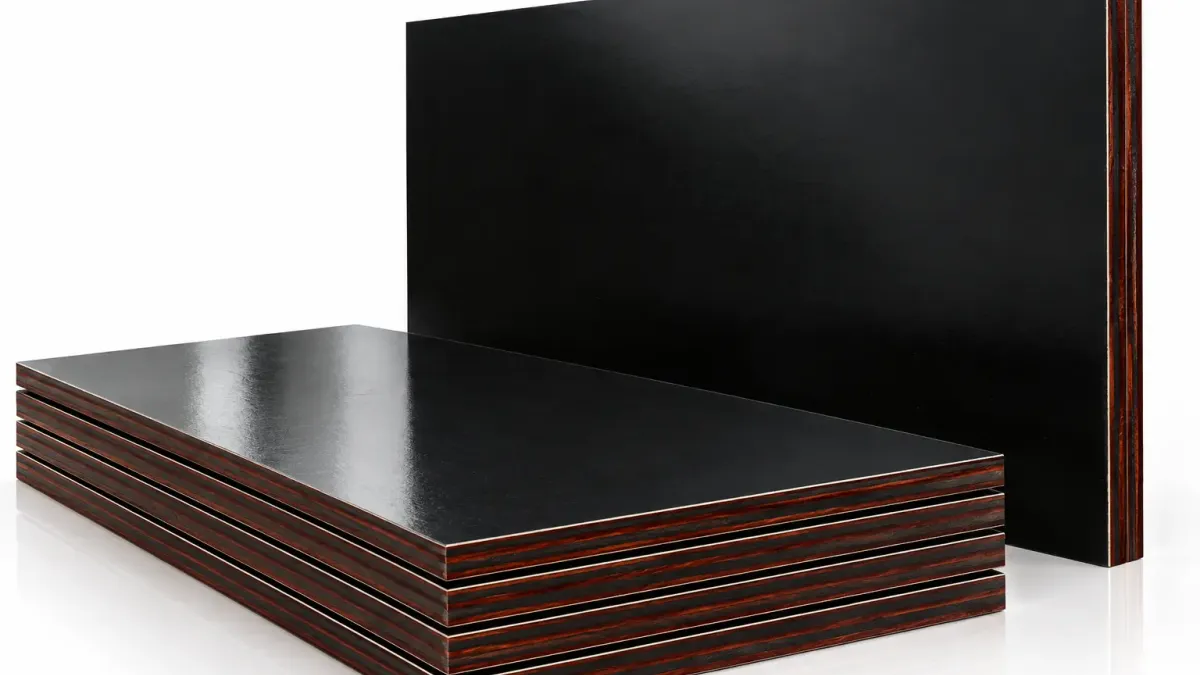
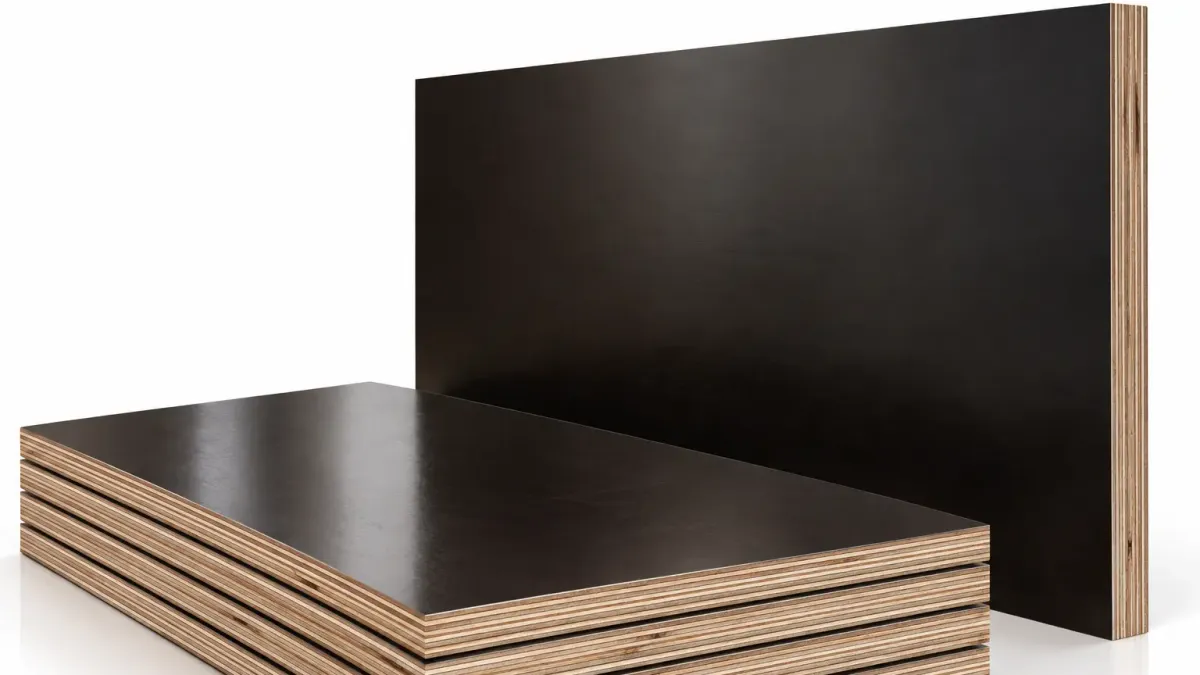
Buyers often ask whether black film shuttering plywood is better than brown film. The short answer: the colour of the film does not decide how many pours a sheet gives. The film weight (GSM), the glue bond, the core and the thickness calibration do.
This guide explains what film faced plywood is made of, where colour can matter, and how to compare quotes on the properties that actually affect your cost per pour.
Key Takeaways
- Film colour is a dye in the resin-impregnated paper. It is not a quality grade on its own.
- Higher film GSM, a waterproof phenolic bond and calibrated thickness drive repetitions and finish.
- Choose the grade by formwork system and finish required, then compare cost per pour.
- Ask for the film GSM and the boiling water test result for the batch, whatever the colour.
What the Film Actually Is
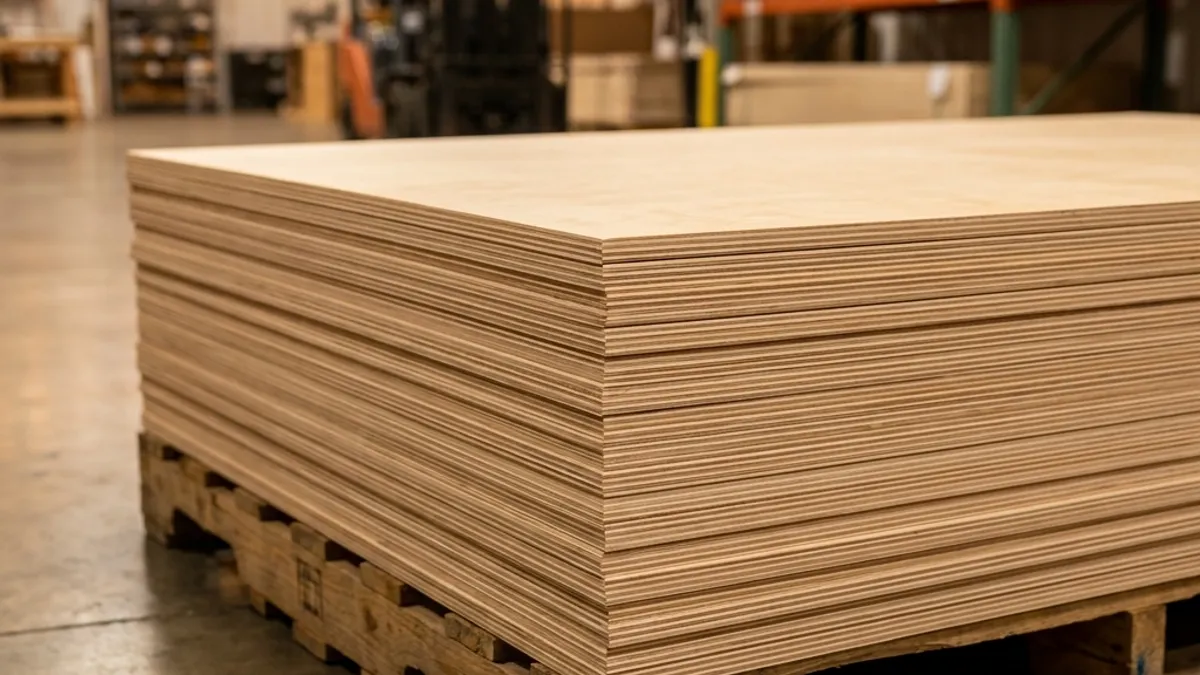
Film faced plywood is hardwood plywood with a resin-impregnated paper (the film) pressed onto both faces under heat. The film seals the surface, resists water and releases cleanly from concrete. Film is made in different colours, most commonly brown and black, and in different weights, measured in GSM (grams per square metre).
A heavier film generally gives a thicker protective layer on the face. That is one reason premium formwork grades specify higher-GSM film.
What Matters More Than Colour
- Film GSM: a heavier film protects the face longer under repeated pours and cleaning.
- Glue bond: a phenolic bond (WBP or BWP) keeps layers together when the board is wet. This is what the boiling water test checks.
- Core quality: a dense hardwood core without voids gives a stiffer, longer-lasting sheet.
- Thickness calibration: uniform thickness lets panels sit flush in system formwork. See what calibrated plywood is.
- Edge sealing: sealed edges stop water entering the core, where most formwork damage starts.
Comparing ZIPCO® and OJA® Film Faced Grades
| Grade | Film and finish | Repetitions | Typical use |
|---|---|---|---|
| ZIPCO® Calibrated Shuttering | Higher-GSM black film, precision thickness | 30+ | Aluminium formwork, scaffolding, RCC |
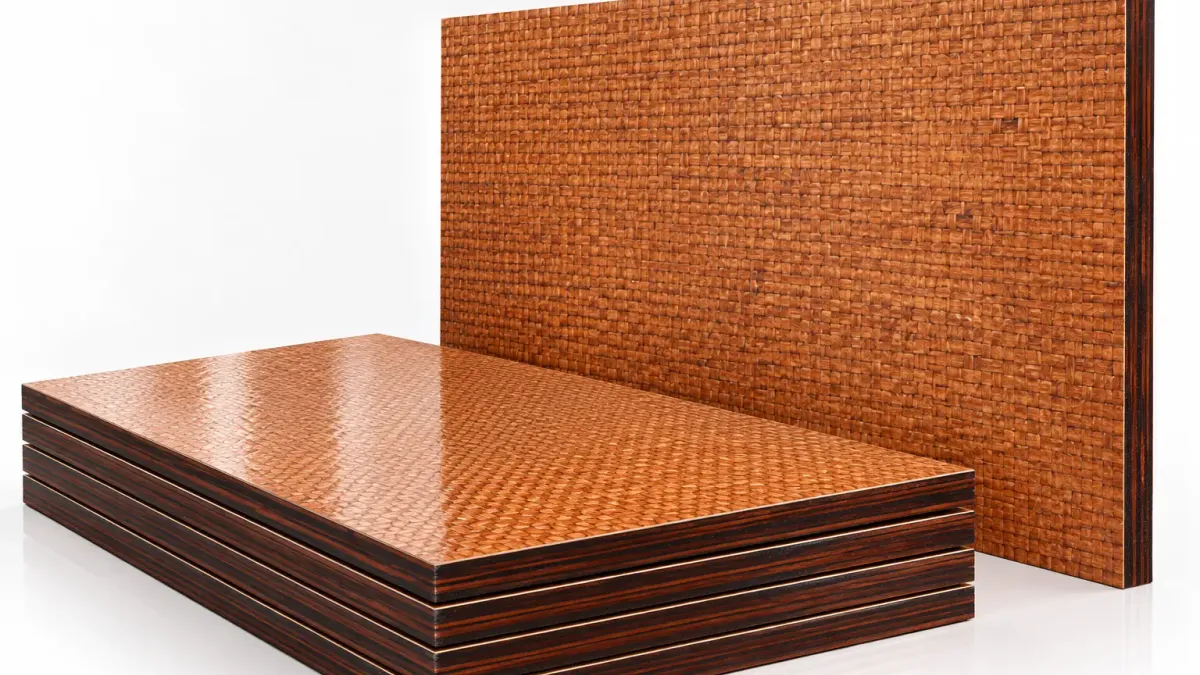
| ZIPCO® Metallic Shuttering | Metallic film, phenolic BWP bond | 50+ | High-rise slab, wall and column cycles |
| OJA® Mirror Finish | High-GSM imported film, mirror finish | 20+ | Fair-faced concrete |
| ZIPCO® 100 Shuttering | Film faced, phenolic WBP bond | High repetition | RCC slab, beam and column formwork |
Repetitions depend on site practice as much as on the board. Release agent, edge sealing and careful stripping can change results a lot; see 12 practices that increase repetitions.
How to Choose
- System or aluminium formwork: prioritise calibrated thickness and high-GSM film.
- Very high reuse (tall towers): choose the highest rated repetition grade and compare cost per pour.
- Fair-faced concrete: pick a mirror-finish film for the smoothest surface.
- Budget slab work with few reuses: a standard film faced grade can be enough. Do not pay for repetitions you will not use.
Then compare quotes on cost per pour, not cost per sheet. The shuttering plywood price guide shows how.
Frequently Asked Questions
Is black film plywood better than brown film plywood?
Which film faced plywood gives the most repetitions?
What does film GSM mean?
Do I need black film for aluminium formwork?
Need a bulk quote?
Share your thickness, size, quantity and delivery location. Our trade desk replies with specifications and pricing for domestic and export orders.