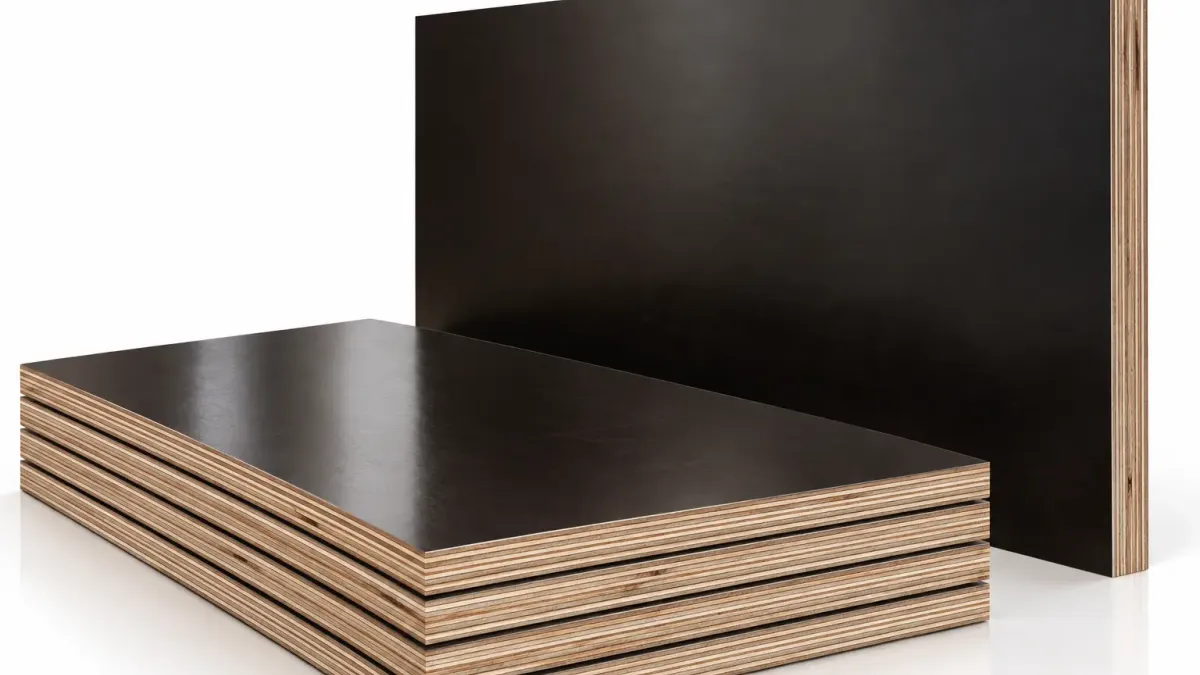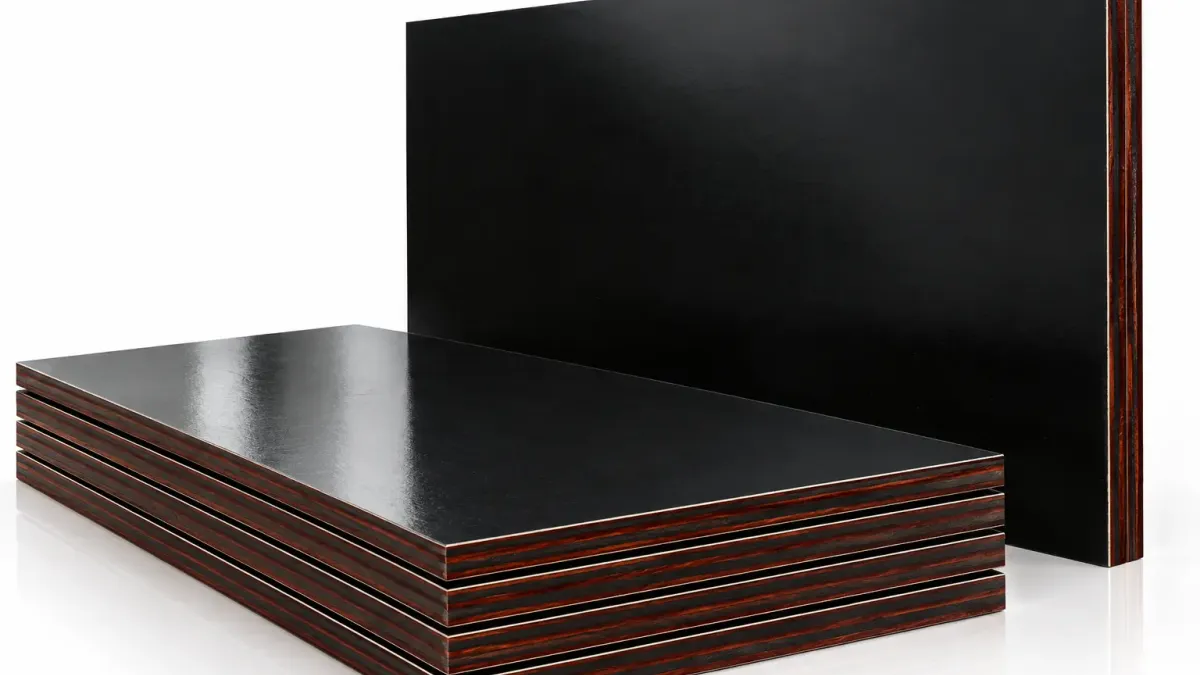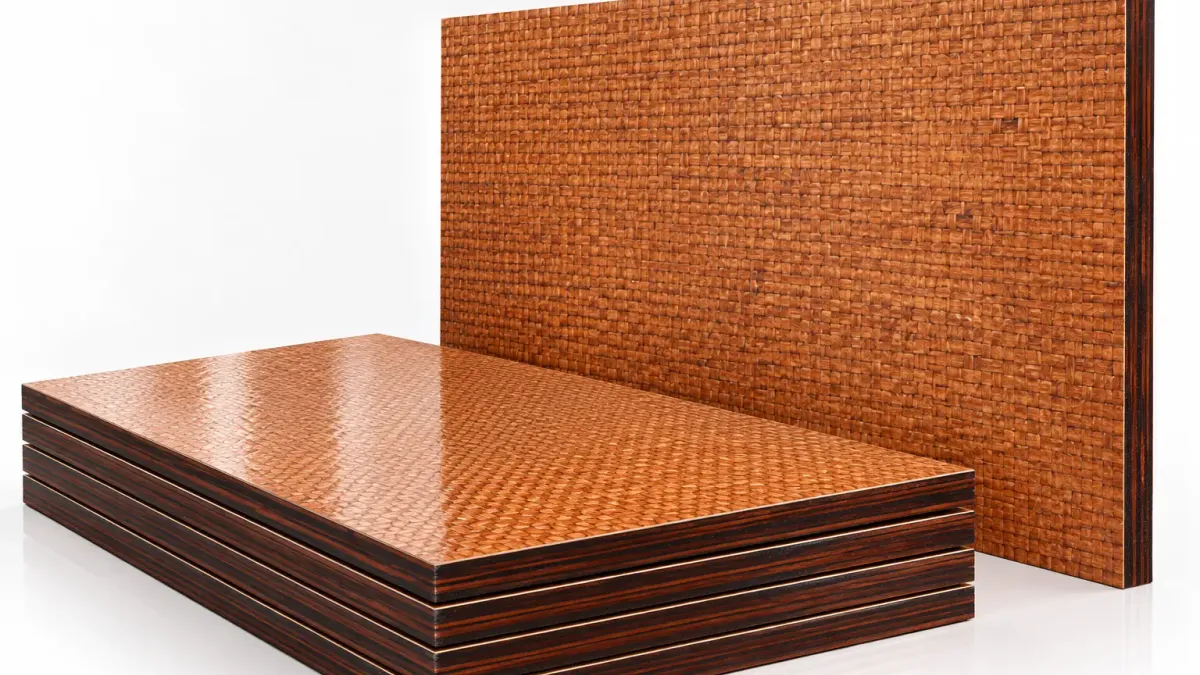
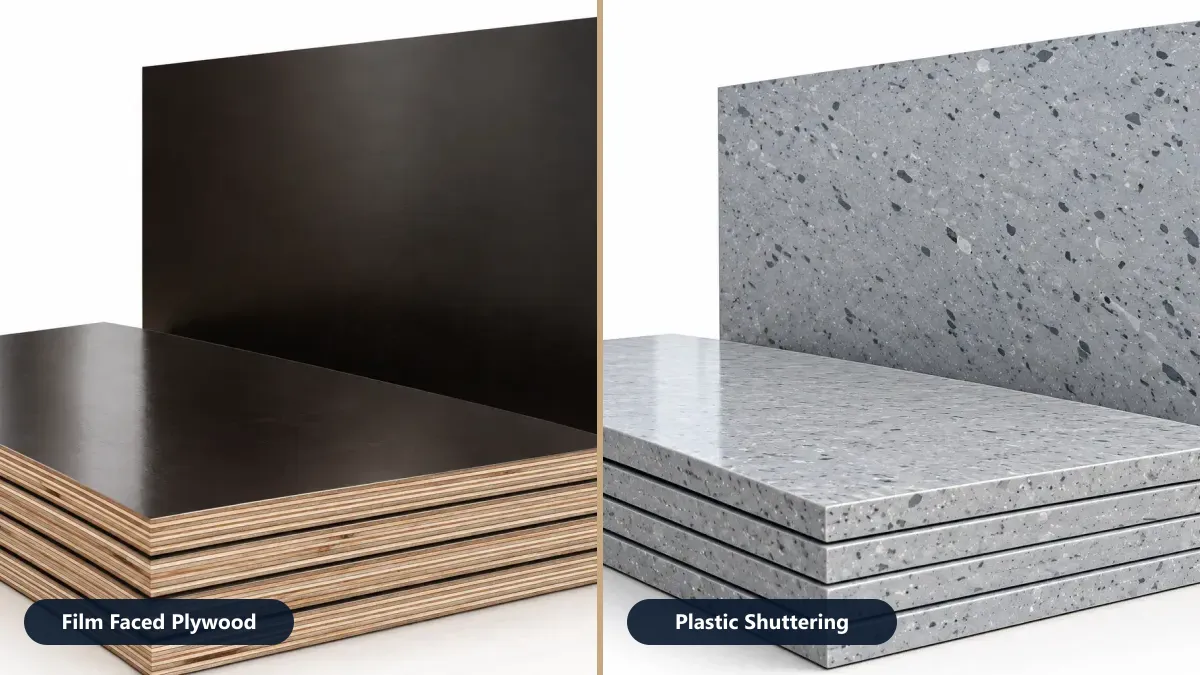
Formwork is the temporary mould that gives concrete its shape, and it has a direct effect on the finish, speed and cost of every structure. On Indian sites the two most common facing materials are film faced shuttering plywood and plastic shuttering boards.
This guide explains how each works, compares them on the factors that matter on site, and helps you choose the right material, thickness and practices for your project.
Key Takeaways
- Film faced plywood is versatile, easy to cut and nail, and suits most slab, beam and column work.
- Plastic shuttering boards do not absorb water or swell, and are rated for 30–60+ repetitions.
- Choose on cost per pour and site conditions, not on price per sheet.
- Thickness, release agent, edge sealing and storage decide how many pours you actually get.
What Is Concrete Formwork?
Formwork (also called shuttering or centring) holds fresh concrete in place until it gains enough strength to support itself. It has two parts: the facing that touches the concrete, and the supporting structure (props, joists, frames and ties) that carries the load.
The facing decides the surface finish and how often the formwork can be reused, so it is where most material decisions are made.
Main types of formwork
| Type | Typical use | Notes |
|---|---|---|
| Film faced plywood | Slabs, beams, columns, walls | Versatile, easy to cut and fix, good finish |
| Plastic shuttering boards | Slabs, walls, repetitive work | Waterproof, high reuse, washable |
| Aluminium system formwork | Mass housing, repetitive towers | Uses calibrated plywood or panels as facing |
| Steel formwork | Columns, precast, infrastructure | Very durable, heavy, high initial cost |
Film Faced Shuttering Plywood Explained
Film faced plywood is a hardwood plywood bonded with waterproof phenolic (WBP/BWP) glue and coated on both faces with a phenolic film. The film gives a smooth, release-friendly surface; the plywood core gives strength and stiffness.
What to check
- Glue: phenol formaldehyde (WBP/BWP). MR glue fails in wet concrete.
- Core: dense hardwood veneers without gaps.
- Film: higher GSM film lasts longer and releases more cleanly.
- Thickness tolerance: essential for system formwork. Choose calibrated boards.
MRP EXIM PRODUCTS offers several grades: OJA® Mirror Finish (20+ repetitions), ZIPCO® Calibrated Shuttering (30+), ZIPCO® Metallic (50+) and ZIPCO® 100 for maximum reuse.

Plastic Shuttering Boards Explained
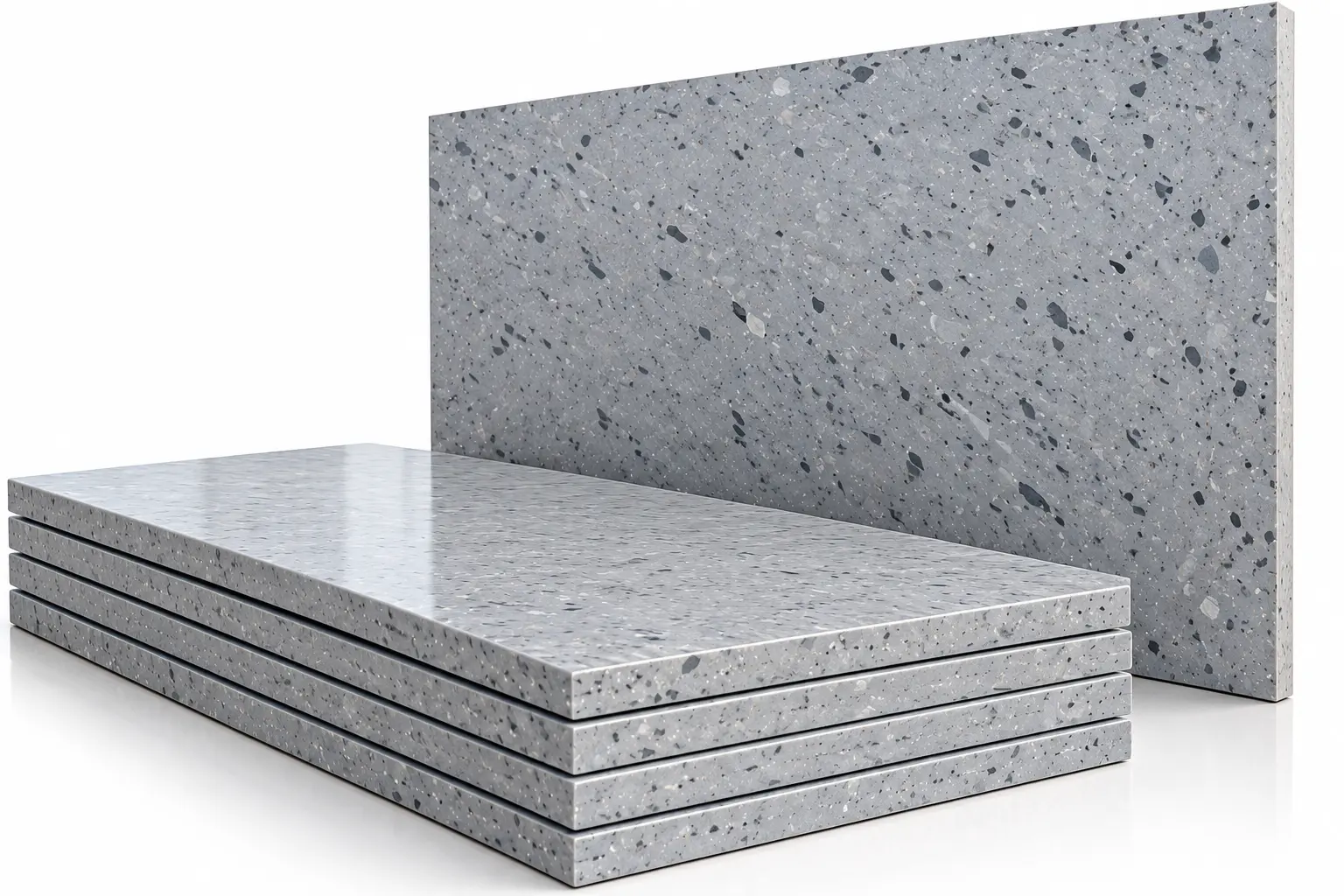
Plastic shuttering boards are solid polymer panels used as the formwork facing. Because there is no wood inside, they cannot absorb water, swell, rot or delaminate, which makes them well suited to monsoon conditions and highly repetitive work.
ZIPCO® Plastic Shuttering Boards come in Solid, Standard and Premium variants rated for 30+ to 60+ repetitions, in 8 × 4, 8 × 3 and 7 × 3 ft sizes and 12–18mm thickness.
Shuttering Plywood vs Plastic: Side-by-Side
| Factor | Film faced plywood | Plastic shuttering board |
|---|---|---|
| Rated repetitions | 20 to 50+ (by grade) | 30 to 60+ (by variant) |
| Water resistance | Waterproof glue; edges must be sealed | 100% waterproof, no swelling |
| Cutting and nailing | Easy with standard tools | Possible, but plan cuts carefully |
| Concrete finish | Smooth (mirror finish on premium film) | Smooth, consistent |
| Repair | Fill and re-seal small damage | Washable; less prone to surface damage |
| Upfront cost | Lower | Higher |
| Best for | General construction, varied shapes | Repetitive floors, wet conditions |
Choosing the Right Thickness
Stiffness rises with the cube of thickness, so an 18mm board is about 3.4 times stiffer than a 12mm board. In practice:
- 12mm: aluminium/system formwork and columns with closely spaced supports.
- 18mm: standard slab and beam formwork on joists.
- 25mm: heavy pours, bridges and infrastructure.
Read the full comparison: 12mm vs 18mm shuttering plywood.
Which Material for Which Application
| Application | Recommended |
|---|---|
| Residential slabs and beams | OJA® Mirror Finish 18mm or plastic shuttering |
| Aluminium system formwork | ZIPCO® Calibrated Shuttering 12mm |
| High-rise repetitive floors | ZIPCO® Metallic or plastic shuttering |
| Bridges, flyovers, heavy RCC | ZIPCO® 100 or OJA® 25mm |
| Monsoon or very wet sites | Plastic shuttering boards |
Best Practices for More Repetitions
- Seal every cut edge of plywood the same day.
- Apply a thin, even coat of proper release agent, never waste oil.
- Fix from behind; avoid nailing through the film face.
- Strip with wedges, clean immediately and store flat, covered and face-to-face.
See all 12 site practices in How to Increase Shuttering Plywood Repetitions.
Frequently Asked Questions
Which is better: shuttering plywood or plastic shuttering?
How many times can plastic shuttering boards be reused?
What thickness of shuttering plywood is used for slabs?
Do you supply formwork materials in bulk?
Need a bulk quote?
Share your thickness, size, quantity and delivery location. Our trade desk replies with specifications and pricing for domestic and export orders.